


That sharp jolt from an iced coffee or a sip of coffee is called dentin hypersensitivity. Here’s what causes it and how to get relief.
What’s Actually Happening Inside Your Sensitive Tooth?
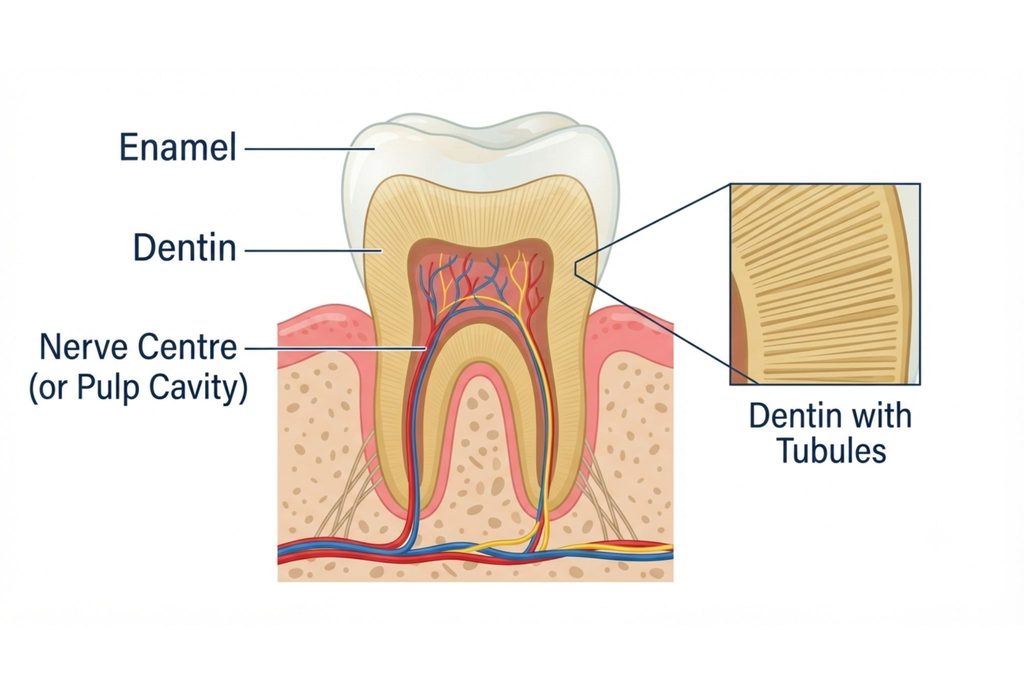
Under the enamel lies dentin, a layer filled with tiny channels called tubules that connect to the tooth’s nerve. When enamel wears down, or gums recede, these tubules become exposed, allowing hot, cold, or sweet foods and drinks to reach the nerve more easily. The sharp sensation you feel is tooth sensitivity.
What Are the Most Common Sensitive Teeth Causes?
Six common triggers behind exposed, reactive teeth.
- Brushing too hard wears down enamel and gum tissue over time
- Acidic food and drink, such as citrus, soda, and wine, slowly dissolve enamel
- Grinding or clenching can strip enamel near the gumline while you sleep
- Gum recession exposes the root surface underneath
- Cracks, chips, or cavities give triggers a direct path inward
- Recent whitening or dental work causes mild, temporary sensitivity
Why Are My Teeth Sensitive All of a Sudden?
Sudden, localised pain points to something specific rather than general wear. Worth checking:
- Is it just one tooth? That often means a crack, a loose filling or a cavity.
- Changed your toothpaste or mouthwash recently? Abrasive or acidic products can irritate exposed dentin.
- Are your gums tender nearby? Recent irritation can expose root surfaces in that one spot.
How to Fix Sensitive Teeth at Home
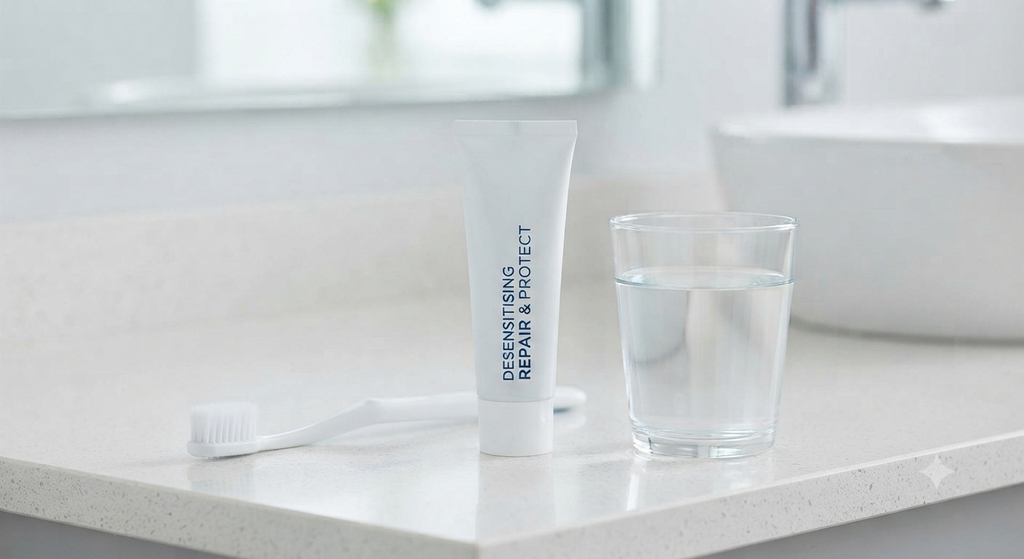
Four small swaps that make a real difference.
- Switch to an extra-soft toothbrush: light, circular strokes at a 45° angle protect enamel and gums.
- Use a desensitising toothpaste: potassium nitrate calms nerve pain; stannous fluoride helps seal exposed dentin.
- Ease up on acidic food or drink: rinse with water and wait 30 minutes before brushing.
- Choose an alcohol-free, fluoridated rinse: soothes rather than dries out your mouth.
What Tooth Sensitivity Treatment Options Are Available?
When home care isn’t enough, these are the clinical options.
| Treatment | Best For |
| Fluoride Varnish | Mild enamel thinning |
| Dental Bonding & Sealants | Exposed roots or notched teeth |
| Custom Nightguard | Grinding and clenching |
| Gum Grafting | Significant gum recession |
| Root Canal Therapy | Severe, persistent nerve pain |
How to Prevent Teeth Sensitivity Long-Term
- Brush morning and night with fluoride toothpaste, and floss daily
- Keep up regular check-ups so early wear gets caught early
- Wear a sports mouthguard during contact sports
- Drink plenty of tap water to support healthy saliva
When Should You See a Dentist?
Occasional mild sensitivity is manageable at home. Book a visit if you notice:
- Pain that lingers well after the trigger is gone
- Pain with no obvious trigger at all
- Discomfort when biting or chewing
- Swelling, bleeding or receding gums
- A cracked, chipped or dark tooth, or a loose filling
- Pain that disturbs your sleep
Need Help with Sensitive Teeth?
Living with sensitive teeth day to day isn’t something you need to put up with. The team at Sparkling White Dental can identify the cause and the right fix for you. Find a clinic near you or book a consultation online today.
