


A faint blush of pink in the basin is easy to ignore, but it can be your gums trying to tell you something. Here’s what it may mean and when a dentist should take a look.
Is Bleeding Gums When Brushing Normal?
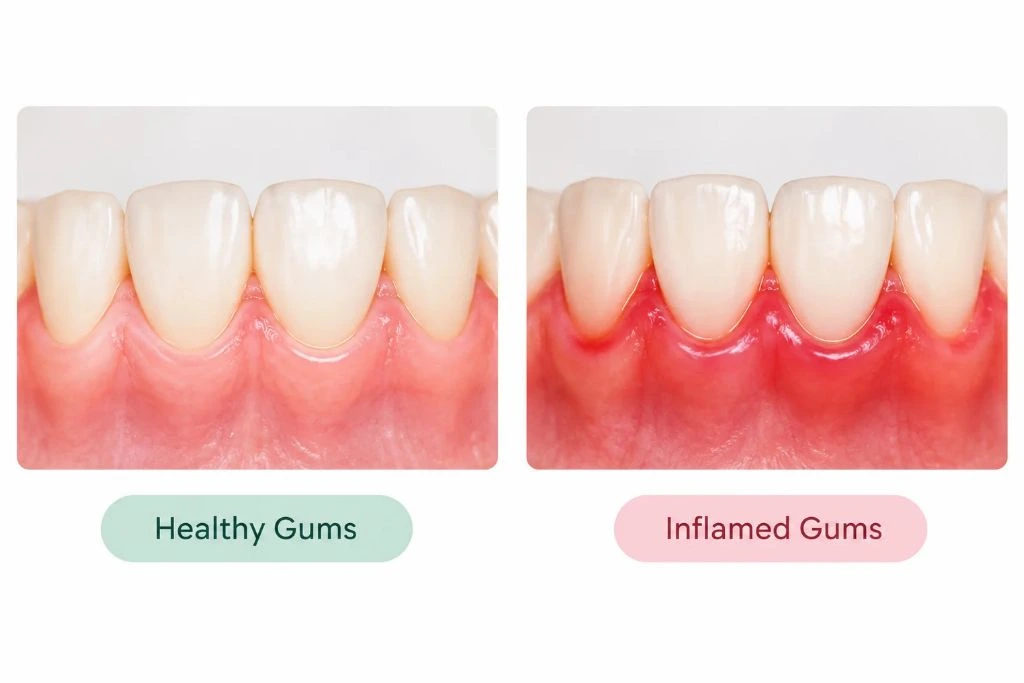
Healthy gums don’t usually bleed. Inflamed ones often do.
A single episode after an extra-firm brush or your first flossing session is common. Bleeding that keeps coming back is not normal and can point to inflamed gums.
Main Causes of Bleeding Gums
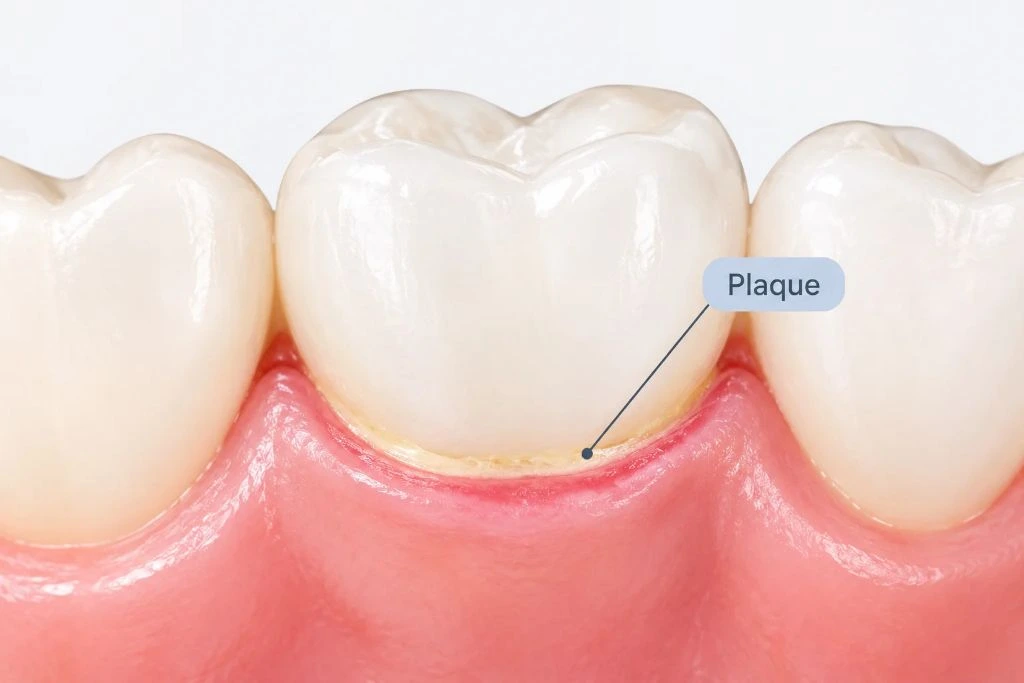
Plaque Build-Up: A sticky film of bacteria collects along the gum line and can harden, irritating the soft tissue.
Brushing Too Hard: Heavy pressure or stiff bristles can wear away at the gum margins.
New Flossing Routine: Gums may bleed temporarily when you start or restart daily flossing.
Hormonal Changes: Hormone shifts during pregnancy, puberty or menopause can leave gums more tender and easily irritated.
Vitamin Deficiencies: Low vitamin C (which gum tissue needs to stay healthy) or low vitamin K (which helps blood clot) can make gums bleed more easily, although this is uncommon.
What Are the Signs of Gum Disease?
Colour Changes: Healthy gums are usually pale pink, whereas inflamed gums can look bright red or purple.
Swelling & Tenderness: Gums feel puffy, soft, or sore to the touch.
Persistent Bad Breath: A bad taste or odour sticks around even though you brush regularly.
Gum Recession: Teeth start to look longer as your gums are gradually receding.
Loose Teeth: In advanced cases, the bone that supports the teeth weakens.
Gingivitis or Gum Disease: Which Stage Are You At?
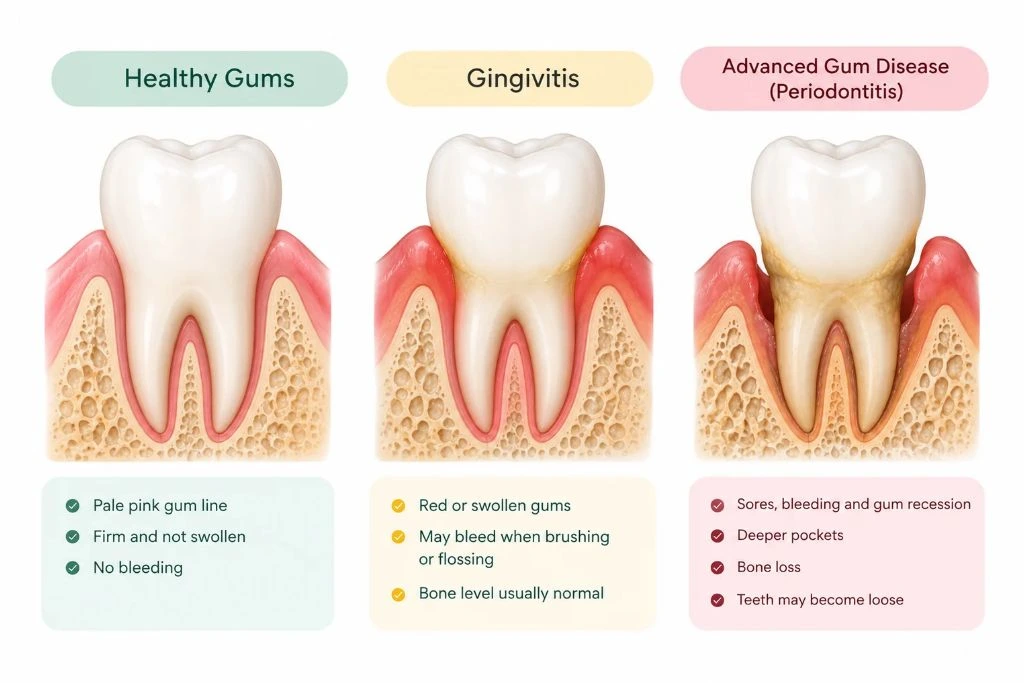
Gingivitis can often be reversed. Periodontitis needs ongoing management.
| Stage | What It Looks Like | Can It Be Reversed? |
| Gingivitis | Swollen or reddened gums that bleed with brushing or flossing | Often improves with professional cleaning and consistent oral care at home |
| Periodontitis | Gums pulling away, deeper pockets, loose teeth | Existing damage isn’t reversible, but progression can usually be managed |
How Can You Manage Bleeding Gums at Home?
| Tip | Action Step |
| Brush Softly | Choose a soft-bristled brush and move it in small, light circles. |
| Floss Daily | Clear trapped plaque from between your teeth, taking care not to snap the floss into your gums. |
| Antiseptic Rinse | Use an alcohol-free antibacterial mouthwash to help keep bacteria under control. |
| Stay Hydrated | Sip water through the day to help keep your saliva flowing. |
When Should You See a Dentist About Bleeding Gums?
Make an appointment if your gums bleed repeatedly, look swollen or stay sore. Gingivitis can often be reversed with a professional cleaning and good daily habits. Without care, it may develop into periodontitis, which can permanently damage the bone around your teeth. Having it checked early may help protect your gums and teeth.
What Happens at a Gum Check?
1. Check: We measure the gum pockets with a fine probe and look for signs of inflammation.
2. Clean: Plaque and hardened tartar may be cleared from above and below the gum line.
3. Plan: You’ll hear about your options, including any risks, along with a home-care routine to follow.
Concerned About Bleeding Gums?
If your gums keep bleeding, the team at Sparkling White Dental can examine them and talk you through your options. Contact us to book an appointment with our dentist, Dr Bik, and our dental team in Brisbane or Goondiwindi.
